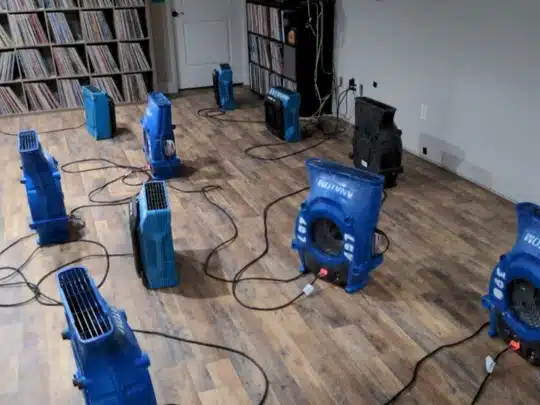
A burst pipe at 2 a.m. A hail storm that punches through your roof. A kitchen fire that leaves smoke damage throughout your home. When property damage happens, your first instinct is to fix it as fast as possible. But the steps you take in the hours and days immediately after a loss can have a big impact on your insurance settlement.
Colorado has experienced 76 confirmed billion-dollar weather and climate disaster events between 1980 and 2024, with severe storms alone accounting for more than half of all those events, according to NOAA’s billion-dollar disaster database. Denver-area homeowners are no strangers to property damage – and understanding how insurance claims work is one of the most practical things you can do before disaster strikes.
Use the steps below to document the loss, communicate clearly with your insurer, and keep the restoration process organized.
Step 1: Make the Property Safe First
Before you document anything or call your insurer, address immediate safety hazards. If there’s a gas leak, shut it off and leave. If the structure is unsafe, don’t enter it. If water is still flowing, turn off the main shutoff valve.
Once the property is safe, take reasonable steps to prevent additional damage – without making permanent repairs. Tarping a damaged roof, boarding broken windows, and moving undamaged belongings to a dry area are all appropriate. Your policy likely requires you to mitigate further damage, but it does not require you to pay for full repairs before your claim is settled.
Step 2: Document Everything Before Touching Anything
This is the most important step most homeowners skip.
Pull out your phone and take photos and video of every damaged area. Include:
- Wide-angle shots showing the full scope of damage
- Close-up shots of specific items, materials, and structural damage
- Any visible cause of damage (the burst pipe, the roof breach, the fire origin point)
- Time-stamped images if possible
Document damaged personal property as well. If you have a home inventory or receipts, gather those. United Policyholders – a nonprofit consumer advocacy organization – notes that letters, photos, and statements from people familiar with your home can help prove what you lost, so don’t hesitate to reach out to neighbors or family who can verify your property’s pre-loss condition.
In Colorado, if you experience a total loss of your primary residence, your insurer must offer you a minimum of 30% of your contents coverage without requiring a completed inventory – but to collect the full contents value, you’ll need to submit that inventory. Under Colorado law, you have at least 365 days after a total loss to submit your contents inventory, per United Policyholders’ Colorado insurance rights guide.
Step 3: Notify Your Insurance Company Promptly
Contact your insurer or agent as soon as it is safe to do so. When you report the claim, you’ll need to describe:
- What happened (the cause of loss)
- When it happened
- Where the damage is located
- An initial estimate of what was affected
This notification is called “giving notice,” and it triggers your rights under the policy. Delayed notice can jeopardize your claim, so don’t wait days or weeks before making the call, even if you’re still assessing the full extent of damage.
You are entitled to a complete copy of your insurance policy within three days of requesting it in Colorado, or within 30 days if you request a certified copy, as outlined in Colorado’s consumer insurance rights. Review your declarations page to understand your coverage categories: Dwelling (Coverage A), Other Structures (Coverage B), Personal Property (Coverage C), and Loss of Use/Additional Living Expenses (Coverage D).
Step 4: Understand Your Right to Additional Living Expenses
If your home is uninhabitable because of covered damage, you may qualify for Additional Living Expenses (ALE) – also called Loss of Use coverage. This covers reasonable costs above your normal living expenses, such as:
- Hotel or temporary rental housing
- Restaurant meals if you have no kitchen access
- Increased transportation costs
Keep all receipts. You typically pay these expenses out of pocket first and submit receipts for reimbursement, though you can ask your insurer for an ALE advance if needed. Colorado law requires insurers to provide at least 12 months of ALE coverage and to have offered 24 months at the point of sale, according to United Policyholders’ Colorado insurance guide. If repair delays beyond your control push you past your ALE time limit, request an extension in writing.
Step 5: Keep a Detailed Claim Diary
Open a notebook or digital document and start recording every interaction with your insurance company. Write down:
- The name, title, and phone number of every representative you speak with
- The date and time of each conversation
- A summary of what was said and agreed upon
- Any deadlines or next steps
Confirm important agreements in writing – email counts. This paper trail protects you if there is ever a dispute about what was promised or agreed upon. United Policyholders specifically recommends setting deadlines and enforcing them, because insurers are required to provide prompt explanations of claim decisions and timely payments.
Step 6: Get Independent Contractor Estimates
Your insurer will send an adjuster to assess the damage, but you are not required to accept their estimate as the final word. Get at least two or three independent estimates from licensed, reputable contractors.
Under Colorado law (C.R.S. 10-4-120), your insurer cannot require you to use a specific repair company or pressure you through incentives or disincentives to choose one over another. You have the right to choose any licensed repair business, as stated in Colorado’s insurance rights documentation.
Also know that “lowballing” – when an insurer tries to settle for less than the full value by artificially reducing the scope or price of repairs – is prohibited by Colorado law.
Step 7: Know What “Coordinating With Insurance” Looks Like
A restoration company like Anatom Restoration documents damage thoroughly and can coordinate with your insurance company on your behalf. This includes providing detailed damage reports, scope-of-loss documentation, and technical information that helps support your claim. Anatom does not file claims on your behalf or act as a public adjuster – that’s the role of licensed public adjusters or policyholder attorneys.
What Anatom can do is make sure the scope of restoration work is clearly documented so nothing gets overlooked or undervalued by an adjuster.
Step 8: Know Your Rights If Things Go Wrong
If you believe your insurer is acting in bad faith – denying a valid claim without reason, delaying payment without cause, or failing to communicate – you have options.
The Colorado Division of Insurance investigates consumer complaints and regulates insurance companies to ensure they follow the law. Filing a complaint with the DOI can trigger a formal investigation. You can also consult a policyholder attorney or licensed public adjuster if you believe your settlement is unfair.
Colorado law allows you to recover twice the amount of covered benefits plus attorney’s fees if an insurer delays or denies payment without a reasonable basis, per United Policyholders’ Colorado rights overview.
Hail and Flood Damage: A Common Denver Scenario
Denver and the surrounding Front Range are among the most hail-prone areas in the country. Many Colorado homeowners’ policies carry separate roof deductibles due to the frequency of hail events, according to the Credit Union of Colorado’s hail and flood damage guide. Before you file a claim for hail damage, review your policy carefully to understand whether a flat deductible or a percentage-based deductible applies.
For flood damage, the same guide recommends acting quickly to stop the water source, moving belongings to safety, and using local contractors who specialize in mold remediation and property restoration. Be wary of door-to-door contractors following a storm – always check reviews and ask for references.
Quick-Reference: Colorado Property Damage Claim Checklist
- Secure the property and stop active damage
- Photograph and video all damage before cleanup
- Call your insurer to report the claim promptly
- Request your full policy copy if you don’t have it (3-day delivery requirement)
- Start your claim diary and document all communications
- Ask about ALE coverage if your home is uninhabitable
- Get independent contractor estimates
- Review the adjuster’s scope of loss carefully
- File a complaint with the Colorado DOI if you encounter problems
Dealing with property damage in Denver or the surrounding Front Range?
Anatom Restoration is available 24/7 to respond, document damage thoroughly, and get restoration started fast. We work alongside your insurance process so nothing gets missed. Contact Anatom Restoration online to schedule an immediate assessment.