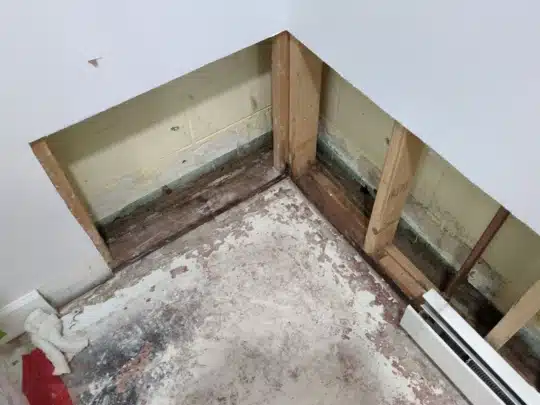
I’ve lost count of how many times homeowners have called me days after water damage, surprised that mold is already growing. “I thought I had time,I was going to deal with it this weekend.”
Here’s the hard truth: Mold doesn’t wait for your schedule.
Understanding how fast mold grows after water damage is critical for every homeowner. The difference between a straightforward cleanup and a costly remediation project often comes down to hours, not days.
After handling hundreds of water damage cases across Denver, I’ve seen what happens when people underestimate mold’s speed. I’ve also seen homeowners who acted fast and avoided the problem entirely.
Let me walk you through exactly how fast mold develops after water damage—and what you need to do to stop it.
The First 24 Hours: Mold Spores Activate
Mold spores are already in your home. They’re in the air, on surfaces, in your HVAC system. That’s completely normal and unavoidable. The problem starts when those dormant spores find moisture.
Within the first 24 hours after water damage, spores begin absorbing water and activating. You won’t see anything yet, but the colonization process has started. Think of it like seeds landing in wet soil—they haven’t sprouted, but they’re preparing to.
What’s happening during hours 1-24:
- Spores absorb moisture from wet materials
- They swell and prepare for germination
- Ideal conditions form in porous materials like drywall, carpet, and wood
- Surface water may be gone, but moisture remains trapped inside materials
This is your prevention window. If you remove all moisture and completely dry affected areas within this first day, you can stop mold before it establishes.
Critical actions for the first 24 hours:
- Stop the water source immediately
- Extract all standing water
- Begin drying with fans and dehumidifiers
- Remove soaked materials that can’t dry quickly
- Call professional water damage restoration for anything beyond minor spills
The problem? Most people underestimate how much moisture remains hidden. You might mop up surface water, but moisture has already soaked into drywall, insulation, and subfloors where you can’t see or reach it.
Hours 24-48: Visible Mold Growth Begins
This is when mold stops being a potential problem and becomes visible. Between 24 and 48 hours after water exposure, mold spores germinate and form colonies.
You might start seeing small spots or patches of discoloration:
- Dark spots on walls or ceilings
- Fuzzy white or green patches on wood
- Black streaks along baseboards
- Discoloration on carpet backing
You’ll also notice the smell—that distinct musty, earthy odor signaling active mold growth. That smell is microbial compounds released as mold digests organic materials in your home.
What’s happening during hours 24-48:
- Mold colonies establish and begin spreading
- Root structures penetrate deep into materials
- Spore production accelerates
- Contamination spreads to surrounding areas
- Health risks increase for sensitive individuals
At this point, simple cleaning won’t fix the problem. Mold has rooted itself into materials. Surface cleaning removes what you can see while leaving colonies alive beneath.
I’ve watched homeowners wipe visible mold with bleach, thinking they’ve solved it. Two weeks later, the mold returns because they never addressed the moisture or the growth beneath the surface.
Days 3-7: Rapid Colony Expansion
After 48 hours, mold growth accelerates dramatically. Colonies that were barely visible become obvious. The musty odor intensifies. The affected area expands as spores spread to new locations.
What’s happening during days 3-7:
- Mold covers large surface areas
- Multiple species may grow simultaneously
- Structural materials begin degrading
- Spores become airborne and spread throughout your home
- Health symptoms may appear in occupants
This is when serious problems develop:
- Drywall becomes soft and crumbles
- Wood framing shows signs of rot
- Carpet and padding are completely compromised
- HVAC systems spread spores to unaffected areas
Common mold types during this stage:
Aspergillus (green or gray) – Grows on drywall, insulation, paper. Causes respiratory issues.
Penicillium (blue or green) – Spreads quickly through air. Can trigger allergic reactions.
Stachybotrys (black mold) – Grows on cellulose-rich materials. Produces mycotoxins. Most dangerous variety.
Professional mold remediation becomes essential at this stage. DIY cleaning is inadequate and potentially dangerous because disturbing colonies releases massive amounts of spores into the air.
Days 7-12: Severe Infestation
By one week after water damage, you’re dealing with a full-scale mold infestation if the area hasn’t been properly dried and treated.
Mold covers extensive areas, penetrates deep into materials, and has likely spread to adjacent rooms through air currents and HVAC systems. Structural integrity is compromised. Wood is rotting. Drywall is disintegrating.
Health risks escalate significantly:
- Respiratory problems worsen
- Allergic reactions intensify
- Asthma attacks become more frequent
- Immune-compromised individuals face serious risks
Factors That Accelerate Mold Growth
Not all water damage leads to mold at the same rate. Several factors determine how quickly colonies establish.
Temperature – Mold grows fastest between 77-86°F, but can grow at any temperature above freezing.
Humidity – Relative humidity above 60% creates ideal conditions. Wet materials create localized high-humidity zones even if your home’s overall humidity is normal.
Material type:
- Drywall: Extremely fast growth (24-48 hours)
- Wood: Moderate growth (48-72 hours)
- Carpet and padding: Very fast growth, nearly impossible to save after 48 hours
- Concrete: Slower growth, but mold thrives on organic materials on the surface
Water category – Clean water gives you slightly more time. Gray water and contaminated water contain nutrients that accelerate mold growth significantly.
Ventilation – Poor airflow allows moisture to remain trapped. Enclosed spaces like crawl spaces and basements are especially vulnerable.
Why 24-48 Hours Is the Critical Window
You have 24-48 hours to identify and completely dry water-damaged areas before mold becomes inevitable. This isn’t just my experience—it’s backed by the EPA, CDC, and IICRC standards.
What “completely dry” actually means:
- No visible moisture on any surface
- Moisture meter readings in normal range
- Hidden moisture in walls and subfloors eliminated
- Humidity levels controlled with dehumidifiers
- All porous materials that can’t dry quickly are removed
That last point is crucial. Carpet padding, drywall, and insulation are nearly impossible to dry thoroughly within 48 hours once saturated. Professional restoration often means removing these materials rather than trying to save them.
People frequently think materials are dry because they feel dry to the touch. But moisture remains trapped deep inside, creating perfect conditions for mold growth you won’t see until it’s extensive.
How Professional Restoration Prevents Mold
When you call professionals within the first 24 hours of water damage, we’re not just removing water—we’re preventing mold.
Our mold prevention process:
- Rapid response – We arrive quickly because every hour counts
- Complete moisture detection – Thermal imaging and professional moisture meters find hidden moisture
- Industrial drying equipment – Commercial air movers and dehumidifiers work exponentially faster than household equipment
- Strategic material removal – We remove materials that can’t dry quickly enough
- Antimicrobial treatment – EPA-approved treatments create a hostile environment for mold spores
- Continuous monitoring – We track moisture levels daily until everything is completely dry
This process typically takes 3-5 days, but it ensures mold never gets the chance to establish.
What to Do Immediately After Water Damage
The moment you discover water damage, take these steps:
First 60 minutes:
- Stop the water source if possible
- Call professionals immediately—don’t wait to “see how bad it is”
- Remove standing water with mops, towels, or wet/dry vacuum
- Move furniture away from wet areas
- Open windows if outside humidity is lower
- Start running any fans or dehumidifiers you have
While waiting for professionals:
- Take photos for insurance documentation
- Don’t use regular cleaners on potential mold
- Avoid disturbing visible mold (releases spores)
- Keep children and pets away from affected areas
What NOT to do:
- Don’t wait to call professionals
- Don’t assume it will dry on its own
- Don’t paint over water stains
- Don’t use bleach on porous materials
The Real Cost of Waiting
Every hour you wait after water damage increases the likelihood of mold growth. Every day you delay multiplies the cost and complexity of restoration.
Cost comparison:
- Day 1 response: $2,000-4,000 (water extraction and drying)
- Day 3-5 response: $5,000-10,000 (mold beginning, material removal)
- Week 2+ response: $10,000-20,000+ (extensive mold remediation, structural repairs)
Beyond cost, there’s your family’s health. Mold exposure causes respiratory issues, allergic reactions, and chronic health problems—especially for children, elderly individuals, and anyone with asthma or compromised immune systems.
We Stop Mold Before It Starts
At Anatom Restoration, we’re available 24/7 throughout the Denver Metro Area because timing is everything with water damage.
When you call us immediately after water damage occurs, we respond within one hour with the equipment, expertise, and urgency needed to prevent mold growth entirely.
Call us at (720) 356-0945 the moment you discover water damage. Don’t wait to see if it dries. Don’t try handling it yourself. Don’t give mold the 24-48 hours it needs to establish.
The difference between a successful restoration and a mold nightmare often comes down to a single phone call made at the right time. Make that call now, and we’ll make sure mold never gets the chance to grow in your home.