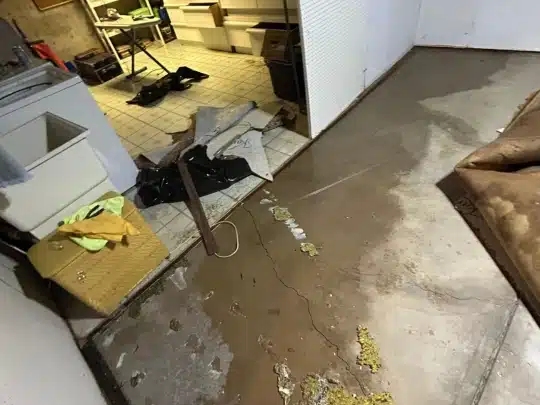
I’ve walked into hundreds of Denver homes where owners had no idea they were living with water damage. No flooding. No obvious leak. Just a slightly musty smell or a small ceiling stain they’d ignored for months.
By the time they called Anatom Restoration, what started as a minor issue had become a major problem, rotted framing, widespread mold, and repair bills that could’ve been avoided entirely.
Water damage rarely shows up as dramatic flooding. It works quietly behind walls and under floors, destroying your home’s structure and creating perfect conditions for mold. The difference between a $500 repair and a $15,000 reconstruction comes down to catching these warning signs early.
Here’s exactly what to look for.
Musty Odors That Won’t Go Away
That earthy, stale smell you’ve been covering up with air fresheners? It’s not just unpleasant, it’s a warning.
Musty odors come from mold and mildew breaking down organic materials in your home. When you smell that distinct mustiness, you’re literally smelling active mold growth. It means moisture has been present long enough for colonies to establish.
Where to check:
- Basements and crawl spaces
- Bathrooms and laundry rooms
- Areas near plumbing
- Closets on exterior walls
In Colorado homes, I frequently find this smell in finished basements where foundation cracks allowed groundwater in during spring snowmelt. The carpet stayed damp just long enough for mold to grow underneath.
Don’t ignore persistent musty smells. Use a moisture meter to check problem areas, or call professionals with thermal imaging to locate the hidden moisture source. The longer moisture sits undiscovered, the faster mold begins growing in those hidden spaces.
Paint or Wallpaper That’s Peeling, Bubbling, or Cracking
Your walls shouldn’t change texture on their own. When paint bubbles or wallpaper peels away, moisture has gotten between the surface and the wall underneath.
Paint and wallpaper bond tightly to drywall. Only water breaks that bond. When moisture seeps into the wall, it saturates the drywall. The material expands and loses its ability to hold paint firmly.
Common problem areas:
- Base of exterior walls (foundation leaks)
- Around windows (failed seals)
- Ceilings below bathrooms (plumbing leaks)
- Near water heaters or appliances
I’ve responded to homes in Littleton and Highlands Ranch where a second-floor bathroom leak went unnoticed for weeks. The only visible sign was slight paint bubbling on the ceiling below.
Cracking paint can also mean moisture cycling, the wall gets damp, dries out, gets damp again. Each cycle weakens the paint until it cracks away. This happens often around windows in older Denver homes during winter when condensation runs onto windowsills.
Don’t assume this is just aging. Peeling paint means water is present where it shouldn’t be. Before you repaint, find the cause preferably with an expert, doing it yourself may work as well. Otherwise you’re covering up a problem that will return, possibly with mold remediation needs if moisture persists.
Warped, Buckled, or Soft Flooring
Floors should be solid and level. When they change shape or feel soft underfoot, water is almost always the cause.
Hardwood warning signs:
- Gaps between floorboards
- Cupping (edges higher than centers)
- Crowning (centers higher than edges)
- Dark staining along seams
Wood expands when it absorbs moisture and contracts when it dries. We’ve restored dozens of Denver homes where a dishwasher supply line leaked just enough to dampen the subfloor, not enough to puddle, but enough to warp hardwood over several months.
Laminate and vinyl warning signs:
- Buckling or lifting at seams
- Sections raised off the subfloor
- Clicking sounds when walking
Soft or spongy spots are red flags for serious damage. When the floor gives beneath you, the subfloor or joists have absorbed significant water and started deteriorating. This is common in bathrooms with failed toilet seals or entryways where rain consistently tracks inside.
By the time flooring shows visible damage, the structural materials underneath have often been compromised for quite a while. This is why professional water damage restoration involves checking beneath surfaces, not just treating what’s visible.
Unexplained Increases in Your Water Bill
Your water meter doesn’t lie. If consumption has gone up but your habits haven’t changed, water is going somewhere it shouldn’t.
Check your water bill every month and compare it to the same month last year. A sudden 15-20% increase without explanation often means a hidden leak—the kind that runs for months inside walls or underground without creating visible puddles.
Simple leak test:
- Turn off all water-using appliances and fixtures
- Check your water meter and write down the numbers
- Wait two hours without using any water
- Check the meter again
- If numbers changed, you have a leak
Common hidden leak sources:
- Toilet flappers that don’t seal (you might hear phantom flushing)
- Old supply lines with pinhole leaks
- Slab leaks where pipes under your foundation corrode
- Failed connections behind appliances
In Denver’s older neighborhoods like Park Hill and Wash Park, we regularly find leaks in homes with original 1950s-60s plumbing.
Even small leaks add up. A running toilet wastes 200 gallons daily. But beyond higher bills, these leaks create sustained moisture conditions perfect for mold growth and structural damage.
If your bill is climbing, track down the source now before visible damage appears.
Stains or Discoloration on Ceilings, Walls, or Floors
Water leaves a signature. Stains and discoloration are visible evidence that moisture has been present and might still be present even if surfaces feel dry.
Water stains typically appear as yellowish, brownish, or rust-colored rings or patches. The ring pattern forms as water spreads outward, depositing minerals at the edges as it evaporates.
What ceiling stains indicate:
- Roof leaks
- Plumbing leaks from the floor above
- HVAC condensation issues
- Ice damming during winter
What wall stains indicate:
- Foundation issues (stains near floor)
- Failed weatherproofing
- Groundwater intrusion
- Roof leaks (stains near ceiling)
- Window seal failures (stains around windows)
Here’s what concerns me most: A dried stain doesn’t mean the problem is gone. The leak might be intermittent, only active during heavy rain or when someone uses a specific fixture. Or worse, the leak might still be active but hidden behind the surface.
We use thermal imaging cameras to see temperature differences that indicate moisture behind walls and ceilings even when visible surfaces appear dry.
Discoloration can be subtle, a section of wall slightly darker than surrounding areas, or a ceiling patch that looks “dirty” but won’t clean. That’s often moisture affecting the material.
Don’t just paint over stains. That’s treating the symptom while ignoring the disease. You need to identify what caused the stain, fix the source, and verify the area is completely dry. Otherwise you’re setting up for mold growth and structural damage that will eventually force its way back.
What to Do If You Notice These Signs
Finding these warning signs doesn’t mean disaster, it means you can prevent one.
Immediate steps:
- Investigate the source—check plumbing, roof areas, windows, exterior walls
- Look for active leaks or obvious moisture
- Use a moisture meter to test suspected areas
- Fix simple issues immediately (leaking faucets, loose connections)
- Monitor the area to ensure problems don’t return
If the source isn’t obvious, moisture readings are high, or you’re finding signs in multiple locations, call professionals.
At Anatom Restoration, we provide thorough moisture inspections using equipment that goes beyond DIY approaches:
- Thermal imaging to see inside walls
- Deep-reading moisture meters for subfloors and structural components
- Years of experience recognizing patterns that point to hidden problems
The worst decision is waiting to see if it gets worse. Water damage is progressive, it doesn’t improve on its own. The longer moisture sits, the more damage it causes and the more expensive repairs become.
We Find What’s Hidden Before It Becomes a Crisis
I’ve seen beautiful homes suffer tens of thousands in damage because small warning signs were ignored too long. And I’ve seen homeowners save enormous expense by acting on subtle indicators before they became disasters.
You don’t need water pouring through your ceiling to have a serious problem. These five hidden signs are your home’s early warning system:
- Musty odors = active mold growth
- Peeling paint = moisture in walls
- Warped floors = water in subfloors
- Rising water bills = hidden leaks
- Stains = current or past moisture intrusion
Pay attention to them.
At Anatom Restoration, we’re available 24/7 throughout the Denver Metro Area to investigate suspected water damage, locate hidden moisture, and provide complete restoration services. Whether you’re dealing with an obvious emergency or subtle changes you’ve noticed, we’re here to help.
Call us at (720) 356-0945 for a professional moisture inspection. We’ll find the problem, explain exactly what’s happening, and give you clear options for fixing it before it becomes a crisis.
Your home is trying to tell you something. Let us help you understand what it’s saying—before it’s too late.